
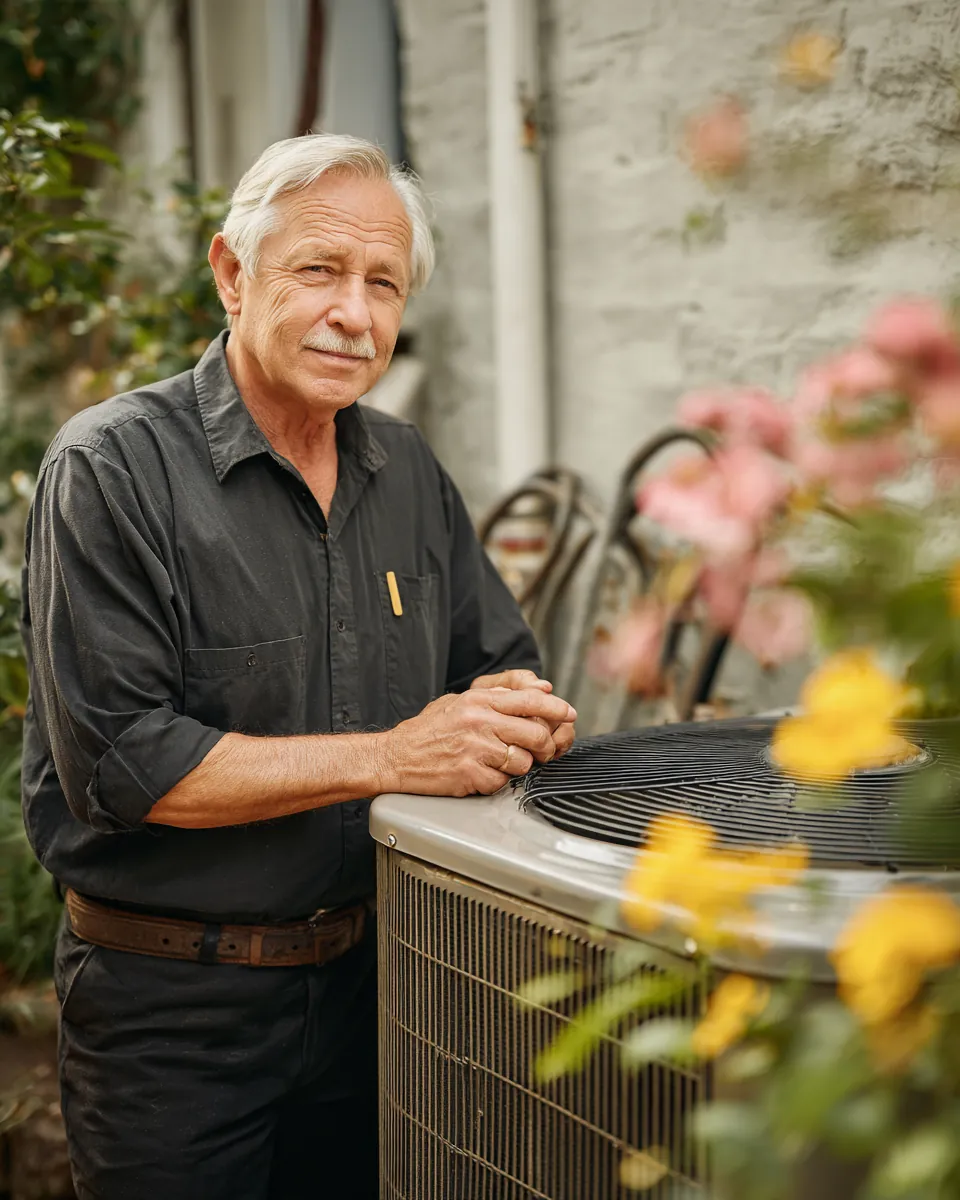
A $2,000 loan is a fixed-rate personal loan that homeowners and renters often use for a sudden home system repair, such as replacing a failed water heater or fixing an air conditioner in midsummer. At an estimated 24.99% APR over 12 months, the payment is about $190.
Who Typically Borrows $2,000
Borrowers in the $2,000 range are usually households with steady income whose essential equipment failed without warning, leaving them with a repair bill too large for one paycheck and too urgent to wait.
A home system failure is different from a planned upgrade. Nobody schedules the day the water heater starts leaking into the garage or the AC compressor quits during a heat wave. These are repairs that protect health, safety and the home itself, and they often cost between $1,200 and $2,500 with installation. The typical personal loan borrower at this size owns a modest house or condo, or rents a property where they are responsible for certain appliances under the lease.
People who search for stax payments at this level tend to compare a small personal loan with the contractor's own financing and with a credit card. Each has a place, but a fixed personal loan keeps the cost separate from your everyday card, gives a clear end date and does not use your home as collateral. That last point matters: this page is about small, unsecured repair costs, not renovation projects or borrowing against home equity.
Lenders in our network see borrowers across the credit spectrum here. Stronger credit may bring offers near 17.99% APR or lower; rebuilding credit may bring offers closer to 35.99%. The lender sets final terms.
Using a $2,000 Loan for Home System Repairs
A $2,000 loan can cover many common home system repairs, including a standard tank water heater replacement, a central AC compressor or condenser fan repair, a furnace igniter and blower fix, or a sump pump replacement before storm season.
The first step after a breakdown is understanding whether you need a repair or a full replacement. A good technician will explain the failed part, the age of the unit and the likely remaining life. A 14-year-old water heater with a leaking tank is almost always a replacement; a 6-year-old AC with a failed capacitor is usually a modest repair. Ask the technician to put the diagnosis and both options in writing.
Getting a fair quote
- Request at least two written quotes when the job is not an immediate safety emergency.
- Ask what is included: removal of the old unit, permits, haul-away and labor warranty.
- Compare equipment efficiency ratings, since a slightly pricier unit can lower monthly utility bills.
- Check for utility rebates on efficient water heaters or thermostats, which can offset part of the cost.
- Confirm whether the manufacturer's parts warranty still covers the failed component.
Timing can change the price. HVAC companies are busiest on the hottest and coldest weeks of the year, and emergency after-hours rates can add a premium. If your home is safe and you have a fan or space heater for a day or two, a scheduled weekday visit may cost less than a Saturday-night call. When the system cannot wait, a lender that funds as soon as the next business day after signing can help, though speed varies by lender and bank.
A Worked Example: Replacing a Failed Water Heater
A typical water heater replacement example shows how a $2,000 personal loan fits a real repair: the quote, the rebate, the trimmed amount and the payment that results at a common estimated APR.
Picture a homeowner whose 40-gallon gas water heater fails on a Monday. The plumber quotes $1,890 for a new unit, installation, a new expansion tank, a permit and haul-away. The homeowner asks about the expansion tank and learns local code requires it, so it stays. The utility offers a $100 rebate on the efficient model, which arrives a few weeks after installation.
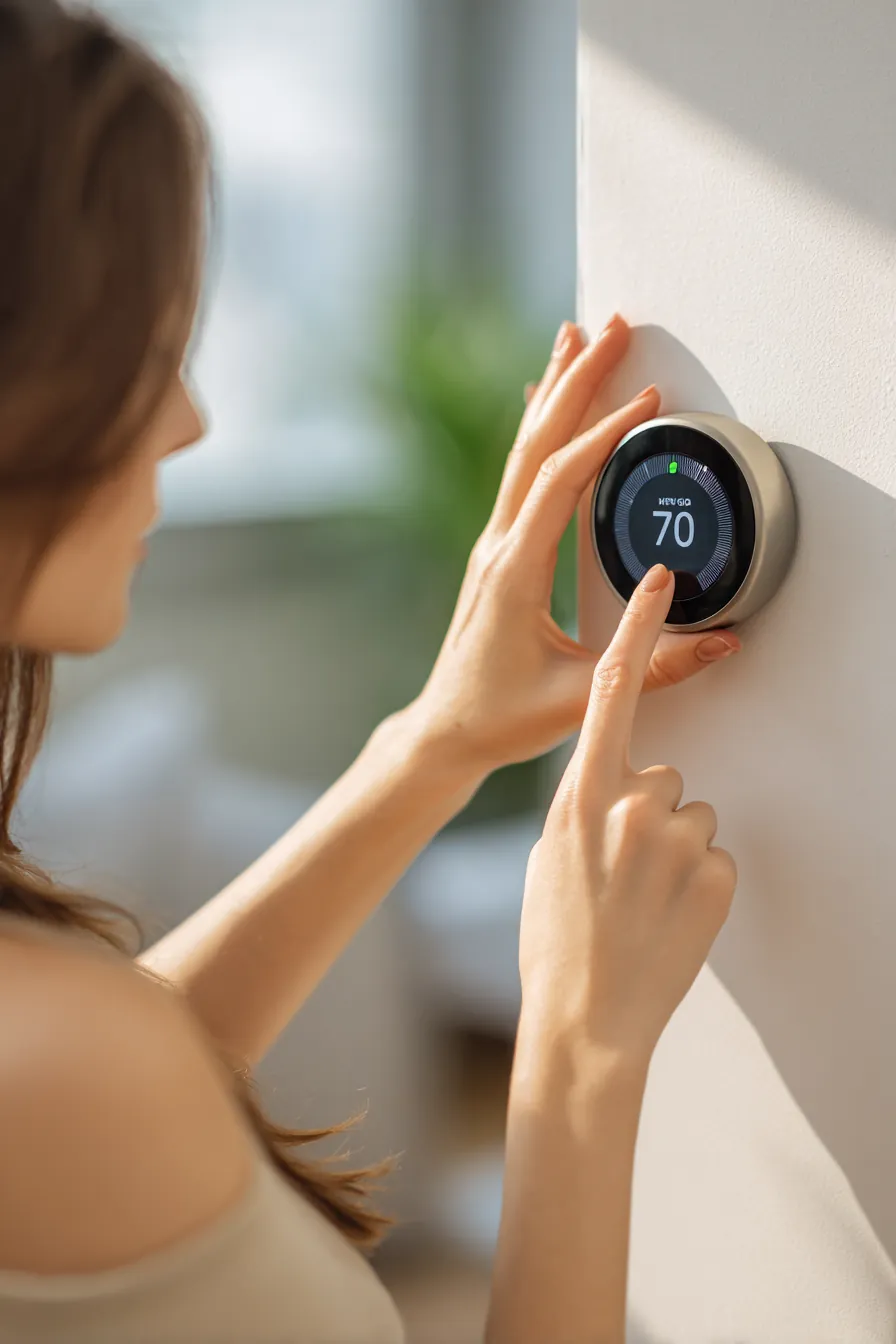
The homeowner requests $1,900 and, at an estimated 24.99% APR over 12 months, a $2,000 balance would cost about $190.08 a month and $2,280.94 in total. Borrowing $1,900 lands a little lower. When the $100 rebate arrives, it goes straight to principal, trimming the balance further. The homeowner also pairs the new heater with a smart thermostat bought later from savings, and sets the water heater temperature to 120°F to reduce standby energy use.
The result: hot water restored within two days, a fixed payment that fits the budget, and a plan to clear the loan within a year without touching the emergency fund that was already earmarked for car insurance.
A second example: an AC repair in a heat wave
Now picture a renter in a townhouse whose lease makes them responsible for the cooling system. During a July heat wave, the outdoor condenser stops spinning. The technician finds a failed condenser fan motor and a weak capacitor, and quotes $640 for the repair. He also notes the compressor is drawing high amps and the unit is 15 years old, and offers a replacement condenser for $2,350.
The renter does not need to decide everything that night. Fixing the fan motor and capacitor restores cooling for $640, which is better covered by savings or a much smaller amount than a $2,000 loan. The replacement quote becomes a planning number: the renter starts saving toward it and asks the landlord whether the lease terms or the property's warranty change who pays for a full replacement. If the compressor fails next summer, the household will already know the price, have two quotes in hand and possibly a partial fund.
The difference between these two examples is the point. A water heater with a leaking tank leaves no choice, so a $2,000 loan sized to the quote makes sense. An AC with a failed fan motor gives you a choice, and the cheaper repair buys time to save rather than borrow.
Estimated Payments on a $2,000 Loan
Estimated payments on $2,000 range from about $72 a month on 36 months at 17.99% APR to about $369 a month on 6 months at 35.99% APR, with the 12-month middle estimate near $190.
The table uses fixed-rate, fully amortizing math with no origination fee assumed. All figures are estimates; your lender decides the APR, fees and term. Use our personal loan calculator to test your own rate and term.
| Term | 17.99% APR | 24.99% APR | 35.99% APR |
|---|---|---|---|
| 6 months | $351.04 | $358.05 | $369.18 |
| 12 months | $183.35 | $190.08 | $200.91 |
| 18 months | $127.60 | $134.37 | $145.41 |
| 24 months | $99.84 | $106.73 | $118.08 |
| 36 months | $72.29 | $79.51 | $91.60 |
The representative example many lenders use at this size is useful for comparison: borrowing $2,000 for 12 months at 24.99% APR gives an estimated payment of $190.08 a month and an estimated total of $2,280.94, with no origination fee assumed. If a lender charges an origination fee, it may be 0%–10% of the amount, which raises the APR. A 5% fee on a 2000 dollar loan is $100, so check whether it is deducted from your funds or added to the balance.
At this amount the gap between rates becomes noticeable. Over 24 months, the difference between 17.99% and 35.99% APR is about $18 a month, or more than $400 over the full term. That is why checking your credit report and comparing several offers is worth the time.
Total Cost Comparisons for $2,000
Total interest on a $2,000 loan at 24.99% APR runs about $281 over 12 months, about $562 over 24 months and about $862 over 36 months, so the term choice can more than triple the cost.
Here is how the totals compare across the most common choices, multiplying each monthly estimate by the number of payments:
| Term and APR | Est. total repaid | Est. interest |
|---|---|---|
| 12 months at 17.99% | $2,200 | $200 |
| 12 months at 24.99% | $2,280.94 | $281 |
| 24 months at 24.99% | $2,561.59 | $562 |
| 36 months at 24.99% | $2,862 | $862 |
| 36 months at 35.99% | $3,298 | $1,298 |
For a water heater expected to last a decade or more, a 24-month term can be a reasonable middle ground. For an AC repair on an aging unit that may need replacement in a few years, a shorter term is wiser so you are not still paying for the old repair when the new system arrives. Read our explanation of what drives personal loan APRs to see where your offer may land.
Requirements Lenders Commonly Check at $2,000
Lenders reviewing a $2,000 request typically verify identity, income, banking information and credit history, and they look more closely at debt-to-income ratio than they would on a smaller amount.
The core documents are similar to other small personal loans: a government-issued photo ID, recent pay stubs or bank statements, a checking account in your name and your Social Security number. At $2,000, some lenders also ask for employer contact information or two months of statements to confirm steady deposits.
- Photo ID and proof of address.
- Recent proof of income: pay stubs, benefits letters or tax documents for self-employed borrowers.
- Bank account and routing numbers for funding and autopay.
- A list of current monthly debts so you can estimate your debt-to-income ratio before applying.
Self-employed borrowers should be ready with one or two years of tax returns or several months of business bank statements, because irregular deposits make income verification slower. Gig workers can often use platform earnings summaries. Having these on hand before you apply can be the difference between funding in a day or two and a week of back-and-forth with an underwriter, which matters when the house has no hot water.
Lenders weigh credit scores, recent late payments and existing debts. If your score is fair or rebuilding, bad credit personal loans may still be possible, though usually at higher APRs. Our personal loan eligibility guide outlines what many lenders look for. A stax payments request on our form is free and comes with no obligation, and the lender, not our service, makes the decision.
$1,500, $2,000 or $2,500: Picking the Right Size
Choose $2,000 when your written repair quote falls between roughly $1,600 and $2,100, step down when a simpler fix is enough, and step up only when replacement of a larger system pushes the firm price higher.
A capacitor or thermostat swap may need only a few hundred dollars, which is better paid from savings or a much smaller loan. A standard tank water heater replacement often fits under $2,000. A heat pump compressor or a tankless water heater conversion can run higher, where a $2,500 loan for vet bills and bigger repairs carries an estimated 12-month payment of about $238 at 24.99% APR.
Avoid adding unrelated upgrades to the same loan. A new sink or fresh paint can wait for cash; the repair you finance should be the one that keeps the home safe and running.
Alternatives for Paying a Home System Repair
Before borrowing, look into home warranty coverage, manufacturer warranties, utility rebates and energy assistance programs, contractor payment plans, and credit union loans, since one of them may lower or replace the amount you need.
A home warranty plan, if you have one, may cover part of a water heater or HVAC repair after a service fee. Manufacturer parts warranties often last five to ten years on major components. Many utilities and state programs help with heating and cooling equipment for eligible households. Contractor financing can work well if the promotional terms are clear and there is no deferred interest trap.
Renters should also read the lease before paying for any repair. In many rentals the landlord is responsible for water heaters and HVAC, and paying for a repair yourself without written approval can make it hard to be reimbursed. Send a written repair request first, keep copies, and ask about your state's rules on repair timelines.
When you compare personal loans online against these routes, line up the total cost of each. Some shoppers who start with a stax payments search end up combining options: a small rebate, a warranty-covered part and a smaller loan for the labor.
Repayment Planning After a Home Repair
A sound repayment plan after a home repair pairs a payment you can carry each month with a small fund for the next breakdown, because a house with one aging system usually has another.
Start by setting a payment date just after your paycheck lands and turning on autopay. Then open a separate savings bucket labeled "home repairs," even if you can only add $20 a month at first. When the loan is paid off, redirect the full former payment into that bucket.
- Schedule routine maintenance: flush the water heater yearly and have HVAC serviced before peak seasons.
- Apply any rebate or tax refund toward principal if there is no prepayment penalty.
- Track the age of each major system so you can plan for the next replacement.
- Review your homeowner's or renter's coverage so you know what is and is not covered.
Maintenance is the cheapest repayment strategy of all, because every repair you prevent is a loan you never need.
Next Steps Before You Request a Repair Loan
Before you request funds, get a written diagnosis and quote, confirm rebates or warranty coverage, settle on the smallest amount that finishes the repair, and gather ID, income records and bank details for the lender.
When stax payments results come back from network lenders, compare each offer's APR, fee, term and total repayment side by side. Choose the shortest term whose payment fits comfortably, and confirm whether early payoff is allowed without a penalty so rebates can go straight to the balance.
We are a free connection service and do not set rates, make credit decisions or approve applications. Final APR, fees, amount, term and approval come from the lender. With a firm quote and a realistic plan, a personal loan can get the heat, hot water or cooling back on quickly and keep the cost predictable from the first payment to the last.
Frequently Asked Questions
Is a $2,000 loan enough to replace a standard tank water heater?
Often it is, since many standard tank replacements with installation, permit and haul-away fall under that figure. Tankless conversions and larger units can cost more. Get a written quote that lists every item, check for utility rebates, and borrow only what the quote requires.
Does a 2000 dollar loan for an AC repair use my house as collateral?
No. The loans on this page are unsecured personal loans, so your home is not pledged as collateral. Lenders base their decision on credit, income and existing debts. Unsecured loans can carry higher APRs than secured options, so compare total repayment before you accept.
What is the estimated payment on $2,000 at 17.99% APR over 24 months?
At an estimated 17.99% APR with no origination fee, a 24-month term works out to about $99.84 a month, or roughly $2,396 repaid in total. At 24.99% APR the estimate rises to about $106.73. Your lender sets the actual APR, fees and term.
Should I take contractor financing or a personal loan for a furnace fix?
Compare both on total cost. Contractor plans may offer promotional rates, but some carry deferred interest charged back if the balance is not cleared in time. A fixed-rate personal loan has a set payment and end date. Choose whichever costs less in total and fits your budget.